 Posting Point
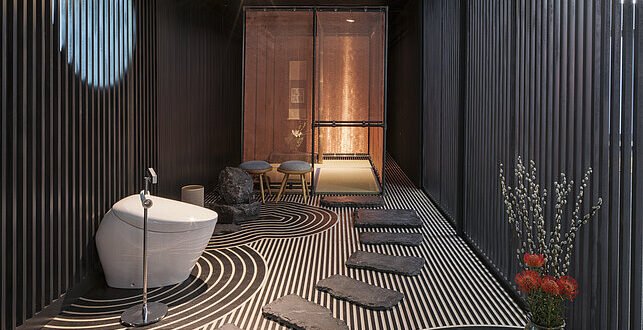
In the world of spatial design, we often say that “light is the first element of architecture.” An architect uses light to define volume, to create rhythm, and to breathe life into cold materials like stone or steel. But light is nothing without its counterpart: shadow.
During my last research trip to a small workshop in Saitama, I watched a master craftsman finishing the face of a Japanese doll. As he moved the figure under a single flickering bulb, the doll’s expression seemed to shift from a stoic mask to a subtle smile. It was a revelation. It reminded me that the most successful architectural spaces are those that, like a traditional doll, understand the alchemy of light and shadow.
1. Chiaroscuro in Miniature: The Sculpted Face
When an architect designs a facade, they are essentially sculpting with sunlight. The deep overhangs of a Frank Lloyd Wright house or the rhythmic fins of a contemporary skyscraper are designed to create “shadow play.”
The Japanese doll is a micro-architectural study of this exact principle.
- The Gofun Surface: The white, matte finish of the doll’s skin isn’t just for color; it’s a “light-catching” device. It absorbs and diffuses light softly, preventing harsh glares—much like the way anarchitectuses lime-wash or frosted panels to soften an interior.
- The Subtle Carving: The features of a Ningyo are intentionally shallow. This allows the ambient light of a room to dictate the “mood” of the doll. In a bright morning, she looks vibrant; in the amber glow of evening, she looks contemplative.
2. Material Resonance: Silk vs. Concrete
One of the greatest challenges for an architect is combining disparate materials into a harmonious whole. We pair the “cold” of glass with the “warm” of timber.
In Japanese dolls, we see this dialogue taken to a level of extreme refinement:
- The Hard and The Soft: The doll has a solid, structural head (hard) paired with voluminous, flowing silk robes (soft).
- The Visual Weight: The way the heavy brocade of a Hina doll’s kimono rests on the floor is a lesson in structural drape. It teaches us how to make heavy materials feel “graceful”—a concept every architect tries to achieve when designing a massive concrete roof that appears to “float” above a glass wall.
3. The Architecture of “The Box”: The Paulownia Wood Sanctuary
In Japan, a high-quality doll is never left exposed to the elements permanently. It lives in a Kiribako (Paulownia wood box). To an architect, this box is as important as the doll itself.
- The Micro-Climate: Paulownia wood expands in high humidity to seal the box and contracts in dry air to allow ventilation. It is a “smart building” in its simplest form.
- The Ritual of Entry: Opening the box to reveal the doll is an architectural experience—it’s the “Grand Entrance.” It teaches us that the way we approach a space (the threshold) is just as vital as the space itself.
4. Color Theory: From Kimonos to Interiors
As an architect, choosing a color palette for a 1,200-square-meter project can be daunting. We often default to “safe” neutrals.
Japanese dolls, however, use a daring yet sophisticated color language:
- Natural Pigments: The deep vermillion (made from cinnabar) and the indigo blues are vibrant yet grounded.
- Seasonal Palettes: A doll’s clothing often reflects a specific season (Spring cherry blossoms or Autumn maples).
By studying the color blocking on a Kimekomi doll, an architect can learn how to use “accent colors” to define different zones within a modern home without cluttering the visual field.
5. Designing for “Ma” (The Negative Space)
The ultimate lesson that Japanese dolls offer the world of architecture is the concept of Ma.
In the West, we often view a doll as an “object” to be placed on a shelf. In Japan, the doll is a “presence” that occupies the air around it.
“An architect doesn’t just build walls; they build the air between the walls.”
When you place a doll in a room, you must consider the Ma—the empty space that allows the doll to “breathe.” This is exactly how we should treat furniture and art in a modern home. If a space is too crowded, the “spirit” of the architecture is suffocated.
Conclusion: The Soul of the Structure
We live in an age where architecture is often judged by its “Instagram-ability”—its ability to look good in a flat, 2D photograph. But true architecture is a 4D experience of light, time, and soul.
The Japanese doll stands as a quiet protest against the superficial. It demands that we slow down, look closer, and appreciate the nuance of a shadow or the grain of a piece of silk.
As an architect, I strive to build spaces that possess the same “inner light” as a master-crafted Ningyo. Whether I am designing a residential sanctuary or a public monument, I carry the lessons of the doll-maker with me: Respect the material, honor the shadow, and always leave room for the spirit.

